When our son was twelve years old, my wife had an affair with a guy called Zach Zirksy, who she knew from synagogue…He was the kind of guy who danced with all the old ladies and pigtailed girls at a bar mitzvah, so he could put his arm around all the pretty mothers and nobody would complain. Even before I saw them holding hands, I didn’t like him.
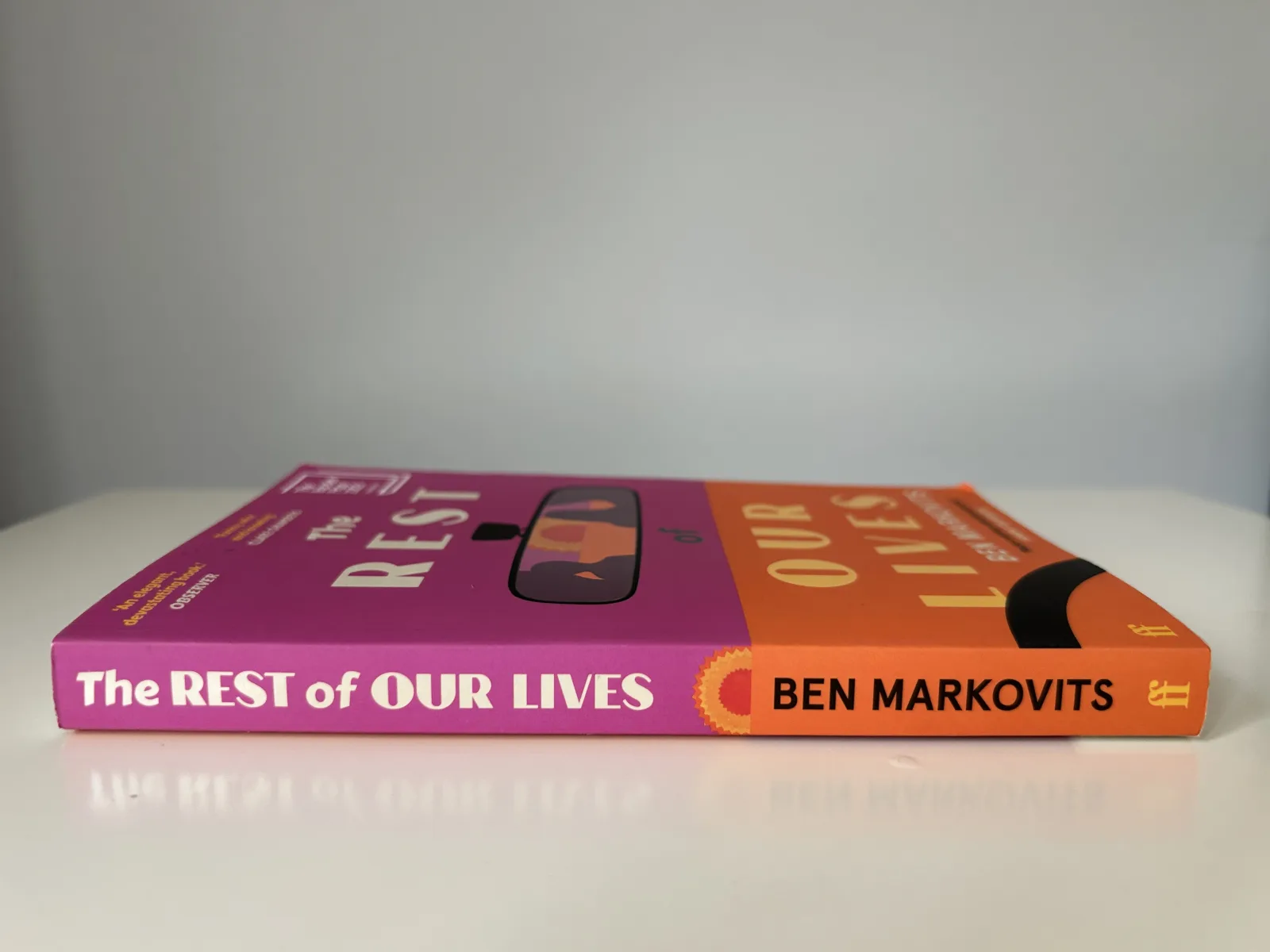
So begins the cracker first page of The Rest of Our Lives by Ben Markovits, a road trip novel about a middle-aged academic. It was shortlisted for the 2025 Booker Prize.
The premise is simple. When Tom Layward’s wife Amy has an affair, he resolves to leave her once their children have grown up. Twelve years later, after dropping his daughter at college, he remembers his pact and instead of driving home, heads west to California.
For Tom, it’s not a difficult choice. His marriage is in tatters, his career as an academic is faltering and his relationship with his two kids is lukewarm at best. Life is failing him.
The Rest of Our Lives starts out strong and Markovits has a simple, engaging style. I sympathised with Tom at first, but as the novel progressed, I realised I didn’t particularly like him. His passivity has affected every aspect of his life. He maintains a dubious friendship with alpha-male Brian, but rarely challenges his aggrieved-white-male outlook. He wakes every morning with a swollen face and leaking eyes but doesn’t go to the doctor. His communication with his wife is poor (he rates their marriage a ‘C minus’) but makes little effort to find out what she needs.
It’s interesting that Tom is proactive in physically trying to drive away from his life, but at the same time remains emotionally inert.
In The London Magazine, Markovits describes Tom as a “guy who is trying to get through his life unscathed without making any big mistakes, without doing anything wrong” but eventually realises this is not a way to live. I think he has definitely achieved this – I just wish I’d enjoyed the journey alongside Tom a little more.