Years ago, while on a plane, I watched the HBO TV limited series, Olive Kitteridge starring Frances McDormand, Jesse Plemons and Bill Murray.
It was a beautifully shot, slow-burn show about a cranky, retired schoolteacher named Olive Kitteridge who lives in a coastal town in Maine. It was a character-driven show, with no obvious overarching plot, but it stayed with me.
Last year, when I discovered the show was based on the novel, Olive Kitteridge, by Elizabeth Strout, I didn't waste any time and quickly bought a copy.
This is a novel about a blunt and opinionated woman whose abrasive nature has a significant impact on the people around her. But Olive is not a cardboard cut-out character – she has an enormous amount of compassion, too.
The novel explores how she navigates her relationships with a range of people – her gentle, but stoic husband; her frustrated son; her neighbours; colleagues, and even strangers. Each chapter of the novel focuses on a different character in Olive's world, with the connecting thread being Olive herself. In one chapter, she helps a suicidal former student; in another she grieves the death of a beloved colleague.
Olive Kitteridge won the Pulitzer Prize in 2009, and deservedly so. It's one of my all-time favourite novels and each chapter is quietly heartbreaking. Together, the stories explore so many themes – regret, loss, grief, unrequited love, jealousy.
So…when I heard that Elizabeth Strout had another novel coming out this year, I was very excited.
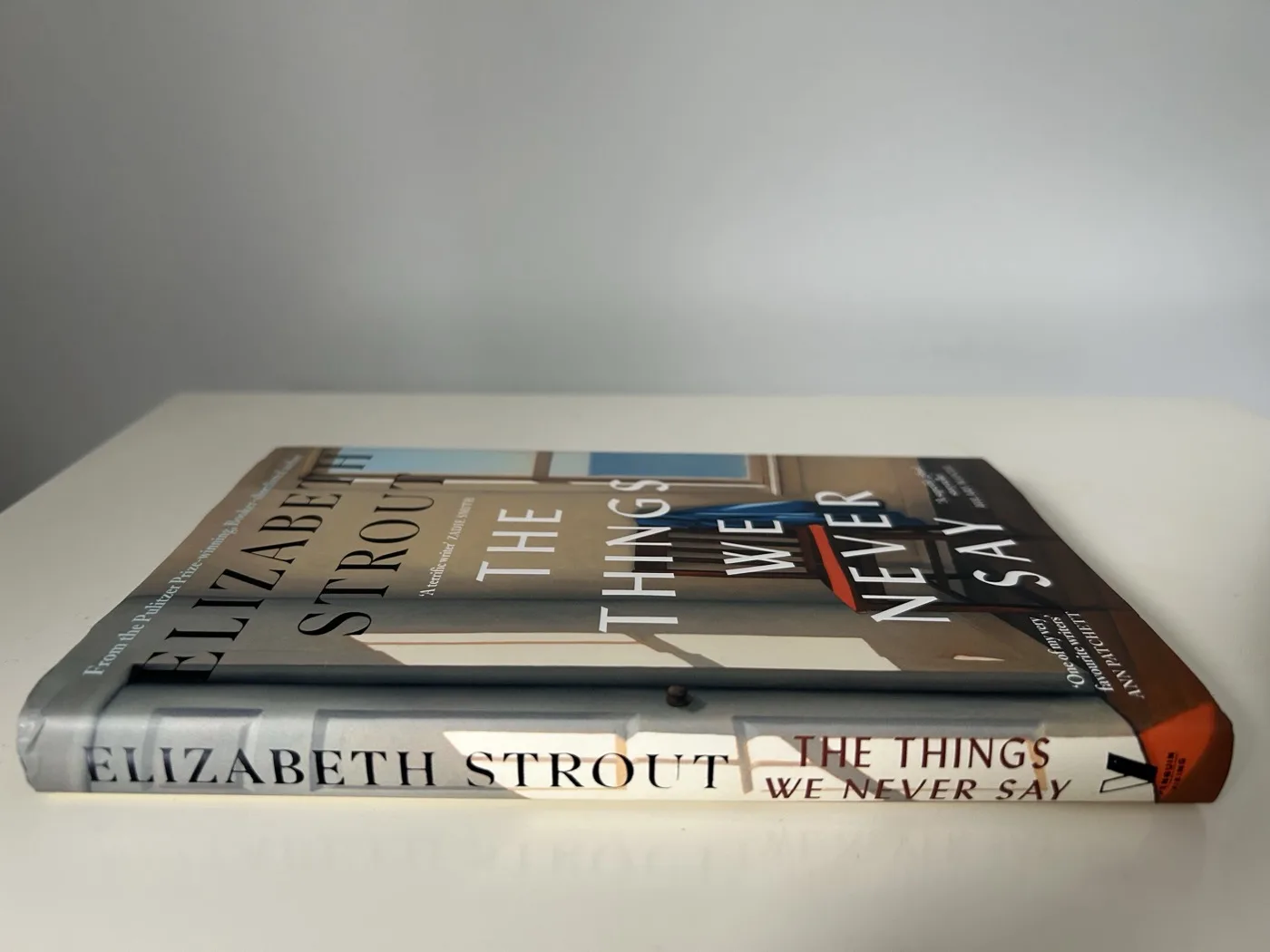
The Things We Never Say is about a character called Artie Dam. He's a popular history teacher in another coastal town and seems, from the outside, to have a wonderful life – he's been married for decades, his students adore him, he has a best friend who loves him and he regularly goes sailing on the bay in his little boat.
However, Artie is secretly unhappy. His life doesn't seem to have meaning and he feels adrift. But then one day, Artie uncovers a secret about his life that upends everything, and his relationships with those closest to him are forever changed.
The questions posed by this novel are: Do we ever really know the people closest to us? And do we ever really know anyone at all?
Strout masterfully takes us on Artie's journey as he grapples with these questions and what they mean for his position in life, and his view of the world. Artie's isolation, confusion and despair are also underscored by Strout's focus on the looming US election, and the advent of artificial intelligence in the background.
I love Strout's ability to paint detailed portraits of ordinary human lives with such sensitivity, insight and restraint. Her elegant prose is always a delight to read, and I thoroughly enjoyed every page of The Things We Never Say.
What can I say? This is a five-star read from me. A winner.